vineri, 8 septembrie 2023

The Uselessly Gendered Cartoons

    Is it just me or does anyone else feel like it's weird to assign genders to cartoons? Am I the only one whose brain just went "f*ck off" upon finding out about this or is it just a universal non-binary experience? Some cartoons I grew up watching were meant for boys (think "Generator Rex", "Johnny Test", "Robotboy", etc.) while some others were meant for girls (think "Bibi & Tina", "Totally Spies", "Strawberry Shortcake", etc.)...but why? What makes "Samurai Jack" boyish and what makes "Holly Hobbie & Friends" girly? Let us investigate. (Quick disclaimer, I'm not an expert. I'm merely an androgynous person expressing some opinions.)

   For starters, we need to look into gender roles. Even though a few cultures are traditionally binary in terms of these, it wasn't until the rise of the Abrahamic religions and colonialism that this heteronormativity became almost oppressive. Once Christianity gained popularity, gender identity became binary and each one had a defined role. Men were supposed to protect and provide for their family or community while women were supposed to marry and reproduce as soon as possible since fertility was a crucial concept back then. Those who challenged this view in any way were considered sinners and, in the worst-case scenario, tortured or executed. So began the age of gender expectations that unfortunately continues to this day, although in most Western countries the only punishment you get nowadays is an angry comment from a boomer or so.

   I think this mentality is instilled into people from a pretty young age and one way of doing it is by inserting certain ideas into cartoons, books, movies, and TV series. That's why most cartoons that are action-based or involve logic are considered for boys while those based on feeling are considered for girls. Also, the character design and colours are divided similarly. I'd imagine it goes like this: if the shades involve colder colours and the design is realistic, it's probably meant for a male audience. Again, this is based on the assumption that strength is equal to cold logic and the muscles of a weightlifter while weakness means showing feelings and being affectionate (which is bollocks imo). This leads to harmful ideas such as suppressing emotions to look masculine or not choosing a career in science to look feminine. But luckily, there are people and pieces of media that challenge this idea.

   Now, let's talk about a movie that I think was ahead of its time, namely "Mulan". Gods, do I love this movie. It defies traditional gender roles in every way, from the failed visit to the matchmaker to the killing of Shan Yu. Of course, we cannot talk about these without bringing up "Reflections". It's a lovely metaphor for, dare I say, coming out of the closet. Mulan doesn't see her reflection in the mirror, but she does truly see it in the sword. She then cuts her hair, which I reckon was a symbol of banishment, and is off to bring honour to her family. In the battle against the Huns, during an avalanche, she saves the army's strongest man, the general Li Shang. Later on, to sneak into the palace, Yao, Ling, and Chien Po dress up as concubines (aka do drag) to act upon Mulan's plan. She needs both her feminine and her masculine side to defeat Shan Yu since she uses both a fan and a sword for it. In the end, the whole forbidden city bows to her after she literary embraces the dragon. If that's not empowering, I don't know what it is.

   On the other end of the spectrum, "How To Train Your Dragon" does a fairly good job of defying the norms. Hiccup wants and tries to fight, but is physically unable to. When Stoic the Vast hands him the axe, its weight almost crushes Hiccup. That's why he used his wits to craft a weapon and catch a Night Fury. However, when he sets out to kill the dragon, he ends up liberating it from the net. He followed his heart and couldn't bring himself to take its life. As much as he tries to hide his fright, he faints after the encounter. From then on, he starts studying the dragon and wondering if he can help it regain its flight. Of course, his bookish behaviour isn't taken seriously until he proves, by winning a local contest, that kindness and knowledge can also be powerful. He won the contest without killing a single creature, going against the norms of his society. Considering these are the Vikings, I suppose men weren't exactly expected to be more than brawns. But once again, I'd say it's still empowering.

  If Disney and Dreamworks can, why can't other companies do it too? Oh, I know! It's because the critics will say the characters lack personality. Newt Scamander is often criticized because he is "boring and lacks masculinity". Besides, some say that challenging traditional roles is indoctrination and promotes the gay agenda™. However, heteronormativity is so integrated in media that few people see it as a problem or even as a form of indoctrination. People go mental when you, say, do a queer reading of "Encanto" or a wlw relationship is confirmed, but will probably not mind tropes like "the damsel in distress" because it's been used for so long. When a piece of information is repeated for a long time, many regard it as the truth. When it is challenged, the response is usually resistance or fear. Will this vicious cycle ever end? I don't know. But there's hope in the fluidity, adaptability, and tolerance of Generation Z.

   Alright, I'm going to wrap it up here. In addition to feeling like I took a boulder off my chest, I sure had fun writing this. I'll end this post with a few sonnets, as it's a new obsession. Now back to the tea and don't forget to eat your vegan Ramen!🫖

Pride Flags 

(source: unco.edu)


1. The Hanged Man

Achilles tears apart the armour of blood,
As Patroclus lies dead in the dark of night;
Tears fall on his face as in flood,
Letting out a shout that trembled Hades in fright.
Nothing could stop him, in anger or grief;
He wanted his and Hector's throat cut,
Even for a moment so brief,
Until his own eyes quietly shut.
Achilles took his armour, in the battle to stride,
To avenge Patroclus, his dear;
The name called for a new pride,
Despite the Fate's rolling tear.
When an arrow strikes his heel,
He is left with a smile to feel.


2. Possession

The only thing the king knows
Is the golden spark in his eyes;
His crown holds coins meant for the crows,
Coins that often strengthen hidden ties.
Gold at crown and Gold at heart,
But never in a way meant to last;
"He's possessed!", sings the bard
Before losing his sight so fast.
All he cares about is finance
And the many ways to spend little;
But rarely finds a balance
For these matters so brittle.
Will he bequeath his crown of gold?
Or will he wear it until it's sold?


3. Strength

I approach the lion with much kindness,
As I never feared any such beast.
But I do not approach in blindness
For his teeth are ready to feast.
I play with a cat, only slightly larger,
And it's worth I never failed to see;
For I was never a soldier
And Leo has never hurt me.
I never felt as bold
As when his teeth I cleaned;
He gave his head for me to hold
And slowly, towards me, he leaned.
Force isn't something you need 

When a friendship you try to feed.

vineri, 1 septembrie 2023

"Tabacaria" vs "Opiario" And My Eternal Obsession With Fernando Pessoa

    I said that I would write about these as soon as I read them. Considering my immense obsession with Pessoa's work, it was inevitable that I would eventually take up “A Little Larger Than the Entire Universe”. I haven't finished it yet, but I already have a few favourite poems (“The Chess Players” and most of Ricardo Reis' poetry; “Opiary” by Alvaro de Campos, etc.) and a few I wish were included such as “The Tobacco Shop” and “Antinous”. But I'm not here to discuss LGBT+ literature yet, even though de Campos' mere existence is LGBT+ literature. I'm here to ask what's the difference between an opiary and a tobacco shop and why am I so obsessed with this? Let us descend into madness and decipher this mystery.

   Let's start with what they have in common, aside from the decade of publication: existentialism, pain, and escapism. In both poems, de Campos is in pain simply because he exists and thinks about it. He laments his fate and says it is all an empty facade, nothing but pretending. He sees himself as a mere naval engineer amongst many others, sitting by a window like many others. He wants to escape, to dream once again, which is why he takes his drugs of choice: opium and tobacco. Just as Bernardo Soares has done nothing but dream, Alvaro de Campos has done nothing but smoke and dream of a far east. To him, life tastes as bitter as tobacco. To numb this, he takes opium so as not to feel sick anymore.

   Also, from a structural standpoint, the two are pretty similar. They introduce the reader into the poet's universe, making them accustomed to the central feeling of each work. “Tobacco Shop” starts by stating that the lyrical voice is nothing unless they let go of their inner world. “Opiary” states that existence feels empty and sickly without opium, without escapism. Both end by taking the reader out of the dreams' world and grounding them in reality. Since we're dealing with modernist masterpieces, rhyme almost doesn't exist. The stanzas aren't structured traditionally either since the number of lines also varies.  But that doesn't make them any less powerful than their classicist counterparts.

   Now, let's discuss symbols and motifs. An obvious one is opium or tobacco, a symbol of his dreams. It is both a stimulant and an anaesthetic. To my understanding, he feels that reality is restricting him in terms of creativity. Life sickens him to the point where nothing entertains him more than the psychoactive effect of the drug does. Opium opens the door to his true potential, even though it is achieved in an imaginary world. Smoking fuels his imagination and enriches his inner world, allowing him to become a better poet. Another motif would be the window. It opens to the outside world the writer does not want to acknowledge. He sits by the window because he needs its light, but never looks through it. He remains focused on his room, his paper, and his inner world. Thus, he does not crave to travel to China and India since he has both and more inside his mind.

  As stated at the beginning of the chapter, de Campos writes about his sensations. Therefore, I assume he thinks more with his heart and other head than the one on his shoulders. As much as he would probably dislike the deep-thinking and the gods of the ancient world, I see Alvaro de Campos in the same way I would see Apollo or Achilles. On second thought, I could bet he was inspired by Apollo since both love the arts and both are bisexual disasters. In addition to that, both would need a therapist but for wildly different reasons. Either way, de Campos doesn't find a point of existence without his crutch.

   Still, we have to remember that de Campos wasn't a natural person. He was simply a well-thought-out character or alter ego of Fernando Pessoa. If Soares (and probably Reis too) is the closest to the actual person, I would argue that Caeiro and de Campos are the farthest. Pessoa “feels with his thoughts” while de Campos does the exact opposite. As for Caeiro, I assume he does neither think nor feel since he just sees. But there's also the possibility that all of these are simply fractions of the writer's personality, fleshed-out characters with a distinct writing style and philosophy. That's basically what made Pessoa immortal, living in his rich inner world.

   All in all, I like these poems and I can see why Fernando Pessoa is considered the most important writer in Portuguese literature. He and his club, Orpheus, helped modernize the country's literature and overall art. Did I mention that he also defended gay artists and fought against the censorship of the Salazar regime? Anyway, Fernando Pessoa seems a fantastic, almost out-of-this-world creature. At some point, it's almost hard to believe he existed. But I'll just wrap it up here with a few sonnets I wrote. Now, back to the tea! 🫖

 Philippe Patricio (collage art): FERNANDO PESSOA

 (source: https://philippepatricioart.blogspot.com/2015/07/fernando-pessoa.html)


1. Light

Everyone saw Apollo

With his golden hair and bright eyes;

But few would see the sorrow

That hid behind those lies.  

Often smiling with rolling teardrops,

He sat on rooftops, lamenting

The fate that his laugh robbed

And this chaos is cementing.

His heart kept pounding, though he was unaware;

Piercing him, rotting from inside,

Was an arrow that brought warfare

When it would collide with his mind.

Will he rise and gain strength?

Or jump to shorten the length? 


2. Bi Morning 

The sun rose high, painting the sky,

As the whole galaxy showed up;

Through the dawn, birds would fly

As the morning began its glow-up.

The shades of purple, pink and blue

Would brighten the painting

Without giving a single clue

Of the silver moon that was fainting.

Apollo craves both blue and red

As he never has a preference

Of whom gets in his bed

As long as maturity is his reference.

He looks both ways in every room

For he might find his bride or groom.

luni, 28 august 2023

A Nerd in London

   Reading an article on Literary Hub almost made me feel homesick for a place I've never seen before, namely Lisbon. (https://lithub.com/wandering-through-literary-lisbon-in-search-of-pessoas-disquiet/). Still, I cannot write about a place that I've barely read about and have never visited. With that in mind, I will write about a place I (platonically) fell in love with, London. I'm in awe of everything even remotely related to it, from the weather and the clean roads to its quite polite people. It is expensive from every point of view, but it is worth it. (Note: Some words here are taken directly from the short journal entries I've written during that week.)

*

   I thought the first day would be chaotic, but I forgot I was dealing with the British organisation. Speaking of British, the museum of the same name had a horrifyingly long queue. It was one of the main attractions that I unfortunately missed. So I spent most of the afternoon wandering through the Russel Square Park, wondering if London might overthrow Brussels on my list of favourite capitals. The neighbourhood was quiet enough to make an introvert happy, but fortunately not quite enough to drive me insane. Everything moved at a slower pace, as though the verb “to rush” didn't exist for them. Through this and the fact that the English don't seem to have the habit of talking to strangers, I felt less exhausted than when in Rome or Athens. 

   Quickly, I got used to the very organised London Underground. Still, that doesn't mean I wasn't on edge. Nothing gets me more nervous than meeting the people I admire, albeit in wax form. At Madame Tussaud's, I felt as if I was stared at by people ranging from Barack Obama to Benedict Cumberbatch. Afterwards came the small Sherlock Holmes Museum, on 221B Baker Street. I encountered Moriarty, The Man With the Twisted Lip, and even the only person that outwitted Holmes, Irene Adler. I nearly saw myself sitting on the famous interrogation armchair, though not as a client. Likewise, I guess one needs to be both the king of swords and of cups in order to be a detective. Afterwards, the day ended with a vegan ramen (Kare Burosu Ramen) at Wagamama, where I met and talked extensively with a relative.

   The third day started and ended in a bus. The first stop was Westminster Abbey, where I was in awe of rich art and history.  Even though I lean towards atheism and am rather apathetic towards the monarchy, I couldn't help but marvel (bitter-sweet) at the centuries of hard work that led to its construction. The gothic architecture truly shines through its stained-glass windows. Then, after a long walk in Trafalgar Square and a visit to The Household Cavalry Museum, followed the lunch in Whitehall. The pulled mushroom, vegan chilli at Silver Cross left me drinking loads of lemonade and wondering if I would survive travelling to Mexico. Afterwards, I almost got lost trying to find the Fopp record shop. Once there, I bought three albums for three friends: Arctic Monkeys' "Live at the Royal Albert Hall" for a friend with a music taste as diverse as mine, Bring Me the Horizon's "Post Human: Survival Horror" for a (fellow) Linkin Park fan, and Deftones' "White Pony" for the eternal alternative admirer in the group. The afternoon was spent entirely in a double decker, learning the history from above. 
  Enormous as London is, it's rather hard to get lost. If you pay attention to the underground lines, you'll reach your destination in the blink of an eye. At least, that's how I got from Russel Square to the Tower Hill. From the bridge, the tower itself and crown jewels to the exhibition of medieval armours and weaponry and the museum of medals, the experience crowned the enchantment of the day. After a lunch at Itsu, a visit at the HMS Belfast followed. It was an intriguing experience to see the machinery that led Britannia to rule the waves. On the way back, I stopped at the Paddington station to see and take pictures of the famous bear.
   Friday was one hell of a way to spend my coming-of-age birthday since I visited four attractions. The natural history museum had an impressive collection that obviously makes every nerd happy. I haven't seen the Smithsonian (yet), but I would bet this one is its European equivalent. Then came the Royal Albert Hall, which I still cannot believe I visited. The place has such an intriguing history, both in terms of the building itself and the events that take place inside. Speaking of which, the tour took place during the rehearsals of the BBC Proms. In the auditorium, I was so engrossed in the music of that Manchester group that I almost didn't hear the cue of our friendly guide, Eve, to leave the place. I can only imagine what it is like to be there when some of the greatest names in the industry perform. After lunch, the Globe Theatre and Shakespeare's entrepreneurship surprised me in the best way possible. Yet another friendly guide, Katie, walked the group through the unique world of the place. Once again, it was during the rehearsals for the play "As You Like It", which got us a glimpse of the nuts and bolts of the theatre. When that ended, I crossed the nearby bridge and marvelled at St. Paul's Cathedral. In the end, it is needless to say that I slept soundly that night.
  Saturday morning was spent seeing roughly a quarter of the giant Royal Botanic Gardens in Kew. The Japanese Garden, the glasshouses, the cacti, and the tropical trees only complete the landscape. I tried to take a picture of a bumblebee but failed miserably. After lunch, I read "The Chess Players" by Ricardo Reis before starting the hunt for souvenirs. I bought teas and teacups, magnets, and rubber bracelets for relatives and acquaintances. A cup of tea at Pret a Manger made all the senseless running worth it. The evening was spent planning the final day and getting the clothes ready to be packed.
   The last day was spent inside the Queen's Galleries. That's where I learned a lot about the art and fashion of the regency era. English portraiture was becoming less formal and more casual. Most people dressed the same, regardless of their social status or income. A way to distinguish the noble was to look for awards or expensive fabrics. In addition the knowledge provided, this collection reminded me that art can also be about symbolism and the story of the masterpiece. It's neither posh nor arrogant to enjoy it, as I used to believe. On my way back, I caught a glimpse of the guard change ritual. Again, my apathy towards both the monarchy and the pompous showed itself in my disinterested figure. Once at the hotel, the rest of that lovely Sunday was spent packing for the day of departure. 
   That one was chaotic. I missed the flight in morning, had to buy a new ticket and had to wait until 19.00 for the departure. In addition to that, the road from Bucharest to Craiova was quite tiring. Basically, I slept about 3 hours and when I tried to go back to it, I couldn't because of the bloody heat. 
   All in all, did London surpass Brussels? Definitely, I think it's head and shoulders above it. I love everything about this town and I might as well return either here or to yet another British city. Anyway, I'm going to wrap it up here with the sonnet I promised. Now, back to the tea! 🍵


Rhetoric
A knot in the throat blocks one's though;
A tongue that bleeds will not be in favour
Of the words that to exist had fought.
But it's all too much of a labour
 
For a mind that always sought 
To savour the winter's flavour
As tranquility it has not 
And disquiet is its only saviour

Apollo's light hid Artemis' mystery;
"Just a cup of tea?" came the Socratic question.
But staring at his feet may only bring misery
And an anaesthetic sensation.

It was a demon he had to dance with
One for whom rejections or mistakes were a mere myth.

vineri, 11 august 2023

Senseless Rhyme

The Chariot Tarot Card Digital Art by Magdalena Walulik

    Apparently, reading the lyrics of songs makes one want to write those themselves. Well, it wasn't just song lyrics. It was also a massive obsession with Fernando Pessoa, William Shakespeare and Mihai Eminescu. I'm currently reading "A Little Larger Than the Entire Universe" and it's fascinating, to say the least. It might as well get a review and an amateur analysis of "Tabacaria/The Tobacco Shop". Anyway, here's some senseless rhyme I wrote with the help of a tarot deck, good music and other poets. 


1. The Sun

The Sun rose in a crimson colour

Above the drops on a flower;

It rose like never before 

Burning everything to the core.

The Sun rose in a crimson colour

But he had too much power:

Everything underneath withered

And a small dandelion whispered:

"I'm glad for the rain of my plain."

(source: fineartamerica)

2. Hummingbird 

There is still a tower

And it's still getting higher

Are there stars somewhere, out there?

Is there more to bear?

One could lose the plot before getting it

It can be searing before liberation

But when the pulse is fit

One gets to be, to truly feel free


3. Demon's Circle (Hyakkimaru)

Crushed skulls, burnt towers

Fresh blood on the shirts 

I lack of any powers

Yet I stand where it burnt

Flames swallowed my skin

I swear this is Nirvana

Because I stand amongst my kin

And I still hold the katana


4. Spider Lilly

Though it's just a memory,

Nobody can steal the spider lilly.

Though it can bring rain,

It was never to blame. 

Still raindrops on leaves and spike

It's the pleasure of the ghostlike.

That's plain calm in an oasis

And that's peace inside the abyss.

A dragonfly above water,

An eagle between clouds,

I never fail to wonder 

What's the lilly in their minds?


5.  Lost (spot the reference)

I feel I'm about to fade

Horror was never my trade;

It's all paralysing

It's like I'm sleepwalking.

I felt this way before 

It's all rotten to the core, so insecure

Peace was all the cost 

But fighting myself I always lost.


6. Corvus MCMXCIV

I'm missing marbles long forsaken

Most hope went down the well

As my wings are long broken

For a reason I cannot tell

Something, somewhere just went missing;

But they say were are all victims

Nothing is worse than the hissing

Of mind's illness and symptoms.


7. About Sumwan

Torn to pieces, yet full of joy

Often alone, yet never lonely

What to expect from the boy 

Who lost all the dearly and lovely? 

In Lisbon, a mere wanderer

Walking both relaxed and agitated 

To mortals, he is wonder

Who he is? Well, to no one he is related

Nothing really bothers him,

Searches his luck from inn to inn;

He gathers peace and anxiety

So as to have variety.

Lisbon bores and inspires him

Many are the paradoxes within 

Most are complex, yet superficial

Everything and nothing is artificial. 


8.  Poet's Attic, 

All the rooms smell of lavender

And white rose, equally intense;

Then it was no wonder

That the word of the muse was immense.

Drunk from dreaming,

The poet takes a seat.

In word and charm drowning,

The night passes in a heartbeat. 


9. Black Goat XV

The cage has an open door

But nobody would leave the floor;

 Who would still need a laugh

When hell is comfortable enough?

To drown in misery or suffer in joy,

All for the sake of a broken toy?

Nothing to lose and nothing to gain

When all you know is pain.


10. Grammatik

Ich fahre gern in den Berg;

Ich bin frei in die Türkei.

Ich bin in Sommer, in August geboren;

Ich bin 2005 geboren und habe meine Angst verloren. 

Am Freitag ist Feiertag (18.08.2023),

Ich bin 18 der ganzer Tag

Und ich habe kein Kopf auf den Hof. 


11. Rhetoric

Eyes of doom fill the room

There's nothing left but gloom;

Anubis will judge soon

If this will be his last noon.

Aaron, merely anon.

Steps forward without a tone;

He felt his bleeding tongue

As a raven sang the the horror of his song. 


12. Ace of Pentacles

The door opens and you see the garden

With the lavender in bloom;

The call so sudden of a siren

Lures you where to feel is your doom.

But the coins begin to roll

To the one with a hundred souls,

The one whose morning star shines above the hall

With the tongues of fire that inside him crawl.


13. The Charioteer of Alexandria

A sphinx in their spring

With a sceptre of gold;

A king of whom the bards sing

For his mind & heart are so bold.

The sign of Thoth reigns above his head

For wisdom is his creed;

He often found the light that led 

Out of the night of his peer's head. 


   That's it for today. A sonnet also named "Rhetoric" is on its way. Now, back to the tea. 🍵

duminică, 23 iulie 2023

Fernando Pessoa And the Curse of Intelligence

   By the time this post will be published, I will have finished Fernando Pessoa's “The Book of Disquiet”. This is not only the longest book I've read so far (926 pages) but also one that I'll return to, as I do with “The Picture of Dorian Grey” and “The Silmarillion”. Pessoa's masterpiece can be both anxiety-inducing and relaxing, both liberating and depressing. That's what makes it existentialist, and that's one of the reasons why I enjoy it so much. As an introverted, solitary person, I understand many feelings and thoughts expressed in the book. After all, most of us just want to be left alone and have some peace. Even though I'm not a literary critic, I want to at least attempt to explain why I find this to be so good.

   This book, just like Pessoa's life, tends to be quite peculiar and difficult to explain. It explores themes ranging from the boredom of routines to the paradoxes that define life as presented through the perspective of an assistant bookkeeper: Bernardo Soares, who lives and works in Lisbon, on Rua dos Douradores. We get to know his life and ideas in the style of a journal of dreaming. We stroll across Lisbon, equally sick of superficiality and fascinated by complexity. Likewise, we get to know his coworkers, his ideas, and his habits. Now, what's interesting about Soares is that he's only a semi-heteronym. Pessoa admitted that Soares is only a mutilated version of himself, one that's slightly more cynical. The book deserves the title of “the weirdest autobiography so far”.

   From an organizational perspective, its structure is (almost) absent. It makes sense to be read both from the beginning to the end, and the other way around. It's made up of short, but intense passages collected from the writings that Pessoa hid in his bottomless chest. Not only that, but it's not even organized in chapters, which honestly makes it even easier to read. The thing is, just because it's not hard to read does not mean it lacks complexity. As I mentioned, each passage is intense, and we need to do some mental gymnastics to understand them. All Pessoa wanted was to be able to exist without being in pain because of his very existence. Did he get that? I don't think so, since he might have drunk himself to death. 

   He suffered from the same illness as Eminescu and many other writers: the curse of intelligence and self-awareness. Intelligence is often misunderstood and can create a feeling of alienation. Clever people typically feel like they don't belong in either crowd. As Hemingway put it, “Happiness in intelligent people is the rarest thing I know”. In addition to that, I read that the more active the mind is, the more prone it is to mental illness. As for self-awareness, it is a paradox (unless it leads to self-acceptance): those who have it can feel both better and worse than they did before. It's a double-edged sword that can be equally helpful and harmful at the same time.

   Still, to better understand any work, we need to take a look at the author's life as well. When he was around 5 or 6 years old, both his father and his brother died. His mother remarried and moved to South Africa with young Fernando and her new husband. He learned the language quickly and got ahead of his class just as quickly. He aced his exams, graduated a bit early, and returned to Lisbon, a city which he never left again. Along with a few other writers, he founded the modernist magazine and literary group “Orpheu” that was going to bring Portuguese literature into the 20th century. He published under several heteronyms, among which three (aside from Soares) are dominant: Alberto Caeiro, a neopagan poet who lived in the countryside, Álvaro de Campos, a ship engineer with a powerful and even wrathful writing style, and Ricardo Reis, a medic with an interest in stoicism.

   What does all this have to do with the work in question? Soares is a character like the other three, but then again, he's the closest to reality, the one most influenced by Pessoa's life. The sorrows he goes through are a mirror image of Fernando's: one is an orphan, the other is fatherless; one is a bookkeeper, the other is a translator, and so on. Both find existence tedious and repetitive, both are dreamers, both have trauma™ and both write about their thoughts. Even their names are similar. Also, I'm probably projecting, but I would even go as far as to say they were both asexuals. (If I recall correctly, Pessoa defended gay writers under the Salazar regime. However, his sexuality, or rather his interest in it, is still debated. But who knows? Maybe straight men do write long, lacrimogenous poems about Emperor Hadrian).

   With that in mind, let's discuss themes: they range from anything to everything. You can find ideas about many major topics such as life, love, art, existence (obvs.), travel, social situations, writing, possession, fame, and so on. The oddly interesting part is that he starts writing about something and then contradicts himself in the middle of the chapter, trying to explain a different point. This shows once more that he's not only aware that he's a living paradox (like most of us) but he also sees them in everyone and everything. Also, something that often took me aback was the sense of humour. He writes that irony is a way to become “conscious of our consciousness”, which reminds me of a joke I read in a review on GoodReads. It goes something along the lines of: Who are the 4 greatest modernist poets of Portugal? Fernando Pessoa (…along with de Campos, Caeiro and Reis :).

   How did I discover this book? Last year, I was in Portugal with an Erasmus project. It was there that I learned about some writers such as Camões, Saramago, and, of course, Pessoa. As soon as the teacher introduced him as a solitary introvert, I had a gut feeling I might be interested in his writing. A year later, when I finally got to read “The Book of Disquiet”, I realized that I was, indeed, right. It's one of the most beautifully sad works that I've read so far, as the YouTuber “Better Than Food” put it. Honestly, I might as well continue on this road with works like: “I Have More Than One Soul”, “A Little Larger Than the Entire Universe”, “The Year of the Death of Ricardo Reis”, “The Lusiads” and so forth.

   In a nutshell, it's a work of art that I find fascinating, to say the least. Again, It's a book I'll probably return to and get my daily dose of anxiety and relaxation. I could write about it for ages, but now I'll simply list some of my favourite quotes. Now, back to the tea!🍵  

The Book of Disquiet quotes by Fernando Pessoa | Fake people quotes ... 

(source: Pinterest) 

Get More From Pinterest | Book quotes, Words, Fernando pessoa 

(source: Pinterest)

94 Inspirational Quotes by Fernando Pessoa, The Author of The Book of ... 

(source:quotes.thefamouspeople)

Best The Book Of Disquiet Quotes with images to share and download for ... 

(source: quoteslyfe)

 Imagine încărcată 

(source: thefamouspeople)

vineri, 14 iulie 2023

The Muse and Music of Generation Z

   What do you call someone who is mental health aware, dislikes rigidity, and has humor as a coping mechanism? Generation Z. I may not understand a thing or two about memes, but I still grew up with the internet and a laptop on my table. What unites this generation is music. Still, technological advances have made it easy to access all types of it, contributing to the fact that diversity is a norm in this generation. That's why artists are also rejecting the idea of being put in the box of one single genre. But what sets gen z apart from the previous ones? What does it have in common with them in this area? In this post, I'm going to state some opinions on the topic of the music that I think defines gen z and perhaps even sets it apart.

   First off, I would say that we are living in an era of exploration and revival. Again, this is all thanks to the development of technology and how it made the access to anything much easier. Back in the day, you had to buy CDs and borrow videotapes in order to listen to music or watch a film. Nowadays, all of this is possible for free from the comfort of your home. That's what allows us to explore genres and musical eras much easier than ever. Also, the universality of this offers us the chance to listen to artists from all over the world, from K-pop to Eminem. In addition to that, the music and fashion of the past are being revived through either tribute from younger artists or through this fantastic exploration. This could help bridge the generation gap. Now, let us dive deep into a quick list of songs that define gen z. Enjoy!

1. Gotye- Somebody I Used to Know

    This one was ever present. Every radio or music TV channel was broadcasting it daily and nightly, and understandably so. Its rhythm as well as lyrics have all the potential to instantly become earworms. Some of us had this song stuck in our brains before we could properly understand English. This bitter-sweet breakup song defines the 2010s and, by extension, those who grew up with it too. Those who listened to it might as well remeber it forever, which is part of the reason it quickly became everyone's go-to karaoke song. That's why it became almost the anthem of the 2010s and probably the greatest hit of that era. It was obvious that its popularity would reach the younger generation as well. We grew up with this song, it's only natural to think that it had influenced us and our taste.


(source: zakasz.blogspot)

 2. Olivia Olson- Everything Stays & Monster

  Most of us grew up watching the chaotic tranquility of "Adventure Time" and its existential songs. I called them "existential" because, just like existentialism, they can be both depressing and liberating in meaning. "Everything Stays" is no exception. I interpret it as being about accepting things that you cannot change as they are. Those have remained the same, but the attitude towards them has changed ("Everything stays, but it still changes"). At the same time, it could be about a certain situation that has changed, but the people surrounding it haven't and most things remain the same. Still, this one speaks against rigidity and resistance to change. On the other hand, "Monster" is about feeling, well, like a monster. It hits hard because most of us are close to coming of age and we do feel as if we "were messed up kids who taught ourselves how to live". In a nutshell, Rebecca Sugar is underapreciated.

Wallpaper : Adventure Time, tree house, nature, mountains 1920x1080 ... 

(source: wallhere)

3. My Chemical Romance- The Foundations of Decay

   Did I mention the emo revival and the fact that I couldn't be happier about it? I apologize if I didn't, this band's reunion is leading the way. It's no secret this band defined the genre that opposed punk. Even though Gerard Way always hated the term and was unable to see the change it could bring to music, he is partly responsible for its 4th wave. A few years after the band's reunion, "The Foundations of Decay" was released and had fans going mental about it. It was refreshing to have a new song in typical MCR fashion after their hiatus. It touches on themes of death, aging, and entering a new stage in life, which reflects what has been happening with the members in the past years. Still, the song contributed to the rise of a new generation of emo, encouraging young artists and listeners to explore the genre. Ironically, this phenomenon brings me much delight.

My Chemical Romance Release First New Music Since 2014 - Listen 

(source: loudwire)

4.  Estelle- Here Comes a Thought

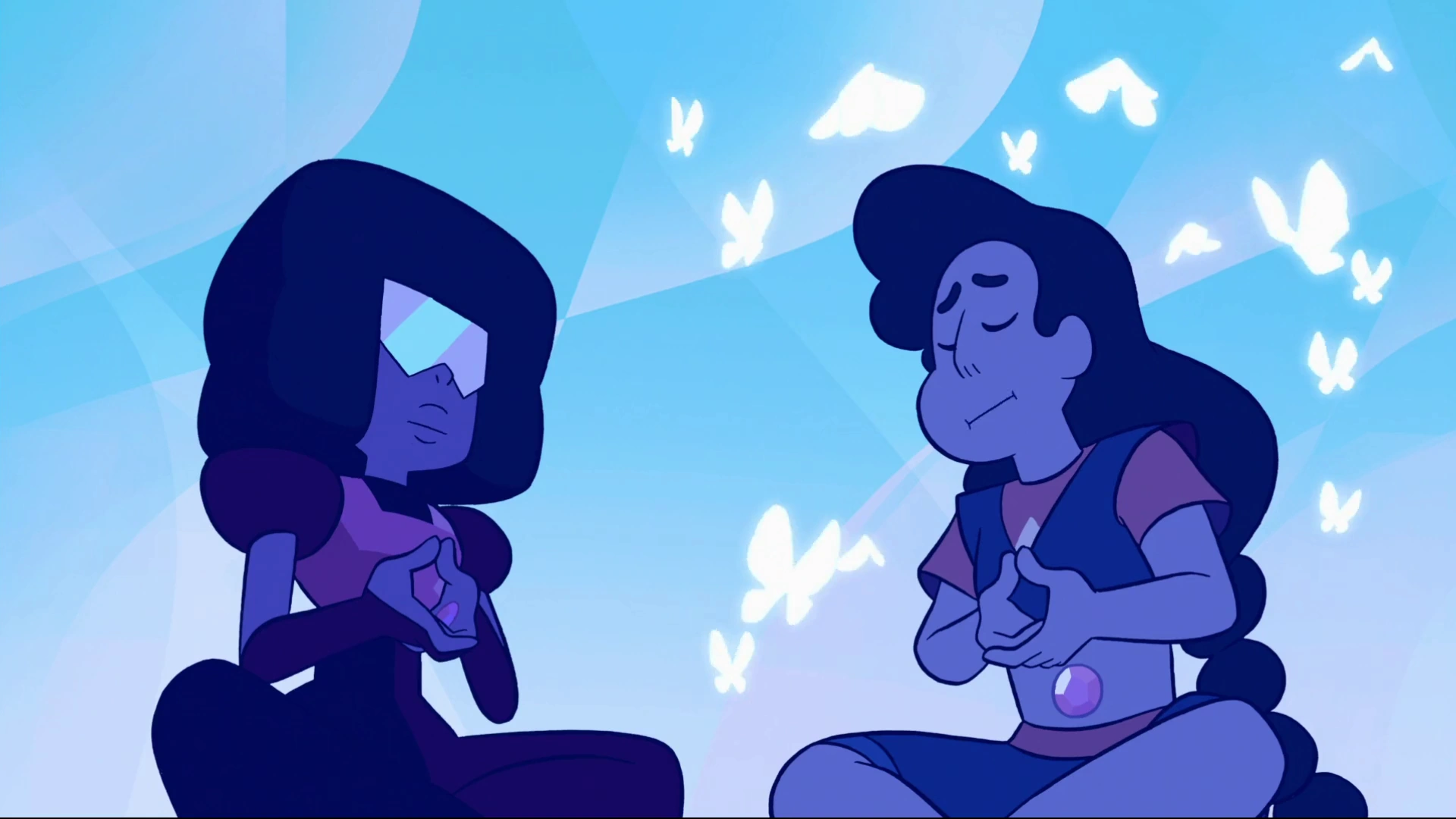
     I would bet a large amount of money this song indirectly contributed to the mental health awareness of our generation. In the episode "Mindful Education" of the beloved series "Steven Universe", Garnet teaches Stevonnie about mental balance and clarity. She says that, to understand your emotions, you "must see them clearly, without running from them". She explains mindfulness in a manner that's easy to understand, but without underestimating the intelligence of the audience. Thus, "Here Comes a Thought" is a reminder to stay calm during a stressful situation by viewing your thoughts and feeling with the detachment of a Buddhist monk. We need to face these matters; but if we let them simply wash over us like passing waves, they won't affect us as much. We also need to remind ourselves that a tough moment is not the end of the world and we aren't falling apart. In the end, did I mention Rebecca Sugar is underappreciated?

Here Comes a Thought | Steven Universe Wiki | Fandom 

(source: Fandom)  

5.  Gayle- abcdefu 

   If "Somebody I Used to Know" is the breakup anthem of the 2010s, "abidefu" is the one for the 2020s. I sometimes forget that the one who wrote and sang this song is just one year older than me and rose to popularity in the most gen z way possible: TikTok. Of course, its popularity can also create fame! The song was originally teased to the platform and then released as a full track. Afterwards came the radio (or censored) version and several remixes. Inspired by personal experience, the song talks about the anger that sometimes follows a breakup. It speaks about how the girl tried to repair the relationship, but the boy didn't cooperate. I personally cannot say that I feel the message, but that doesn't mean it's not an absolute bop and one of my many favorites.

GAYLE – abcdefu Lyrics | Genius Lyrics 

(source: genius) 

6. Måneskin- Zitti e Buoni

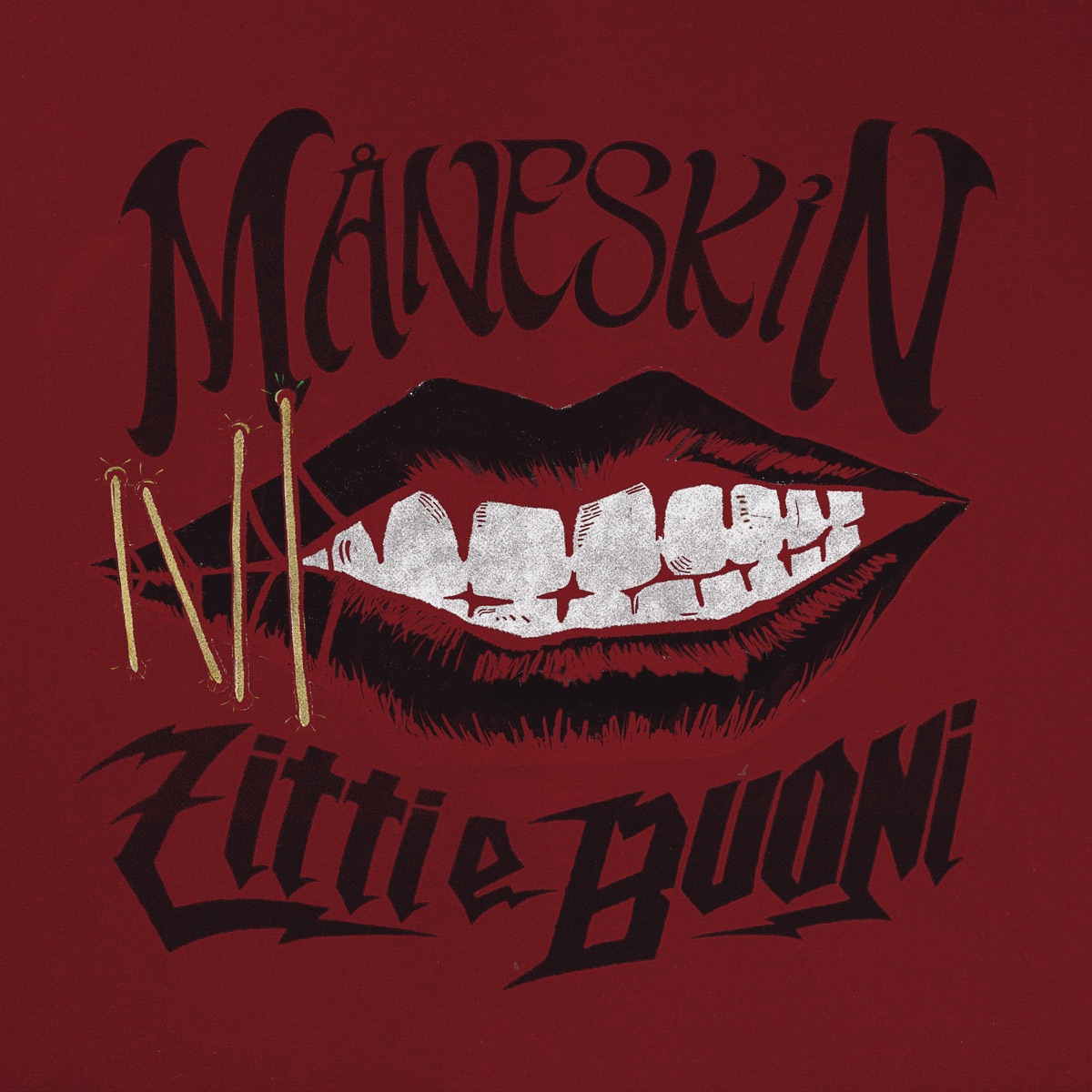
  Let's face it: it's the most popular song, but it's the way most of us discovered the band. Its appeal is quite simple to explain: from a good sound and lyrics to androgynous members, it has everything one would want from a band. The song that got the whole of Europe to (almost) worship Damiano David is also the song that won Eurovision, and rightfully so. It was a win for both rock music and gender non-conforming people, which caused a massive wave amongst youngsters (myself included). It's a song about the freedom of expression, the beauty of being yourself without caring much about how "people talk, unfortunately, and they don't know what they're talking about". It would be a lie to say it was unexpected since gen z dislikes narrow-mindedness. 

ZITTI E BUONI (Eurovision Version) - Single by Måneskin Album Reviews ... 

(source: songslyrics)

7. Yungblud- Mars

    Some people are calling gen z the most queer generation and there's a reason behind that. The quick access to information has made it much easier to learn about anything, including LGBT+ subjects, which led to more people unapologetically identifying with the labels and identities. That's the spirit captured by this beautifully sad song. Its lyrics were inspired by the story of a trans woman that Yungblud met during the 2018 Warped Tour. Her parents weren't particularly supportive of her identity...until she brought them to one of his concerts. Seeing his community helped them understand that there's nothing wrong with her gender identity, further highlighting the idea that one should not be afraid to freely express themselves. I honestly adore the message about acceptance and that story is one of the reasons why I have respect for artists like Yungblud.

    Yungblud shares dramatic visuals for impassioned new single 'Mars' 

(source: nme) 

   All in all, I feel like our generation is hard to define, even in terms of music. We are similar, yet unique at the same time in comparrison to the previous ones exactly because we enjoy diversity. Anyway, do you agree? Do you disagree? These are merely oppinions, but I sure had fun writing this. Peace! ✌️

vineri, 30 iunie 2023

About a Raven and the Beauty of Darkness

   Did I ever declare my love for the gothic genre? Even though it may not look like it, I'm keen on this. Regardless of the medium, I often find myself drawn to its beautifully dark nature as a moth to the flame. From Oscar Wilde to Castlevania and Lord of the Lost, everything about this just fascinates me. A reason for this is the way it embraces the dark side as something normal instead of attempting to eliminate or ignore it. In my opinion, certain situations are not always happy, and fighting against them only makes things worse. The gothic not only acknowledges this but also finds beauty where others would not be able to see it, but you already knew that. I'm writing this because I recently watched a movie that I think embodies the category, namely "The Crow"(1994). It's a typical revenge story filled with misery, blood, and tears; but it's a bit more tragic, both as a story and in terms of its production process. I'm not going to bore you with details you heard over and over, but I am going to obsess over this in the following paragraphs. Enjoy!

   For starters, let me first underline the few things I didn't like about it. It didn't have a large budget and it shows sometimes, especially when it comes to its effects. It's either that or they seem outdated to me. For example, the fire effects may come across as odd to modern audiences. However, its strength in this area comes from the CGI used especially after Brandon Lee's death. That was a pretty good feature for the early '90s.

   With that in mind, I feel like its greatest strengths come from the script, the acting, the soundtrack, and the story overall. The literary references and symbolism only add to its beauty. Also, thematically speaking, it has some philosophical touches. Because raising from the dead is currently impossible, this movie raises the following question: what would we do if we were resurrected for a couple of days? Would we seek vengeance against those who wronged us or would we simply make amends for them? Would it be a curse or simply good luck? Nobody knows and that's (part of) the beauty.

   Again, one of its greatest strengths is the script. Aside from having memorable lines, they also flow like water. There's no line I can think of that could be considered unnecessary as each fit both the character and the situation. At first glance, some of them are simple. However, that can be deceiving as every single line matters and each of them reveals a small detail. As the Crow himself says, nothing is trivial. A good example of this is when he accidentally meets Sarah, a girl he and his fiancee kinda took care of. He says, at some point, that "It can't rain all the time." She recognizes this as a lyric from one of his songs and turns around, hoping to find Eric Draven. Unfortunately, he fleed before she could properly look at his face. Also, something unexpected from a gothic movie is humour and there's some of it. From the Jesus joke to "I say I'm dead and I move", its sense of humor can and probably will take watchers aback.

   If I were to describe the acting with a single word, it would be "marvelous". Brandon Lee truly shines brightly in this role. Hadn't he died while filming, this movie might've made him a superstar in the industry. It sets him apart from his father, both in terms of acting and fighting style. In addition to that, Lee had a contribution to the script when he suggested eliminating a character because it seemed to be stereotypical. The morbid irony is that the movie proved indeed to be popular, bringing him fame posthumously. Another great actor was Michael Wincott in the role of Top Dollar. He manages to become a person you love to hate. Well-dressed and well-mannered to a certain extent, Top Dollar exudes charisma as well as a deeply-rooted corruption and that's the merit of Wincott. He plays the head of a local mafia or a drug lord in a way that reminds us of characters such as Don Corleone. That's how a portrait of a person who we understand, but do not agree with looks.

   Another thing that impressed me about the movie was its soundtrack. The Cure's "Burn" fits the movie like no other song could. Fire is a symbol present in the film and thus song simply highlights that. Fire can be a method of purification as it destroys everything, but allows something new to be built upon the ashes. As Brandon Lee said, the Cow's world will be a better place when he finishes his purging mission. That's why I think "Burn" was such a good choice for it. Also, the song "Inferno" and Eric's guitar solo perfectly injects his feelings into the audience's minds. It is full of rage, scorn, and misery (as INK poetically puts it here https://youtu.be/srlSAxxvfXE) as well as a hell-bent sense of revenge or even duty. Eric is both distraught and furious and the music only accentuates that.

   Still, its literary references and symbols made this one an even more enjoyable watch. These are ever-present. From death and vengeance to fire and the occult, these enrich the story with a few details. As for the literary references, they to start appear from the very first scenes. In one of the flashbacks, T-Bird reads out loud from "Paradise Lost", as if Eric and Shelly didn't know already that their engagement was being sent to hell. Their heaven was being torn to pieces in front of their very eyes, of course, "Paradise Lost" fits! Another one is when Draven returns and comes to a pawn shop reciting from Edgar Allan Poe's "The Raven". That lets the owner know that he IS the raven or even death itself ৻(  •̀ ᗜ •́  ৻). Also, what adds nuance to the story is the fact that it goes on to show that things are rarely ever black-and-white. Eric is right because he is desperate to have justice, but he's also wrong in his methods. You cannot blame him for what he's doing, but you cannot fully agree with him either. The same goes for Top Dollar, the one who opposes him.

   In a nutshell, all of this only adds to the pleasure that the Gothic finds in darkness. I think it is best to embrace this side rather than fight against it. As the lyrics in Bring Me the Horizon's song "Doomed" go: "The sun won't shine, but it never did; and when rains it f*cking pours, but I think I like it". 

The Crow (1994) « Celebrity Gossip and Movie News

Sonnets to Be Spelled By

1. Samsara (II)  There are times when you walk in circles of roses,  And feel nothing but thorns all over the place.  In such times, you fai...