sâmbătă, 23 martie 2024

The Art of Poetry and My Obsession with "Il Ballo Della Vita"

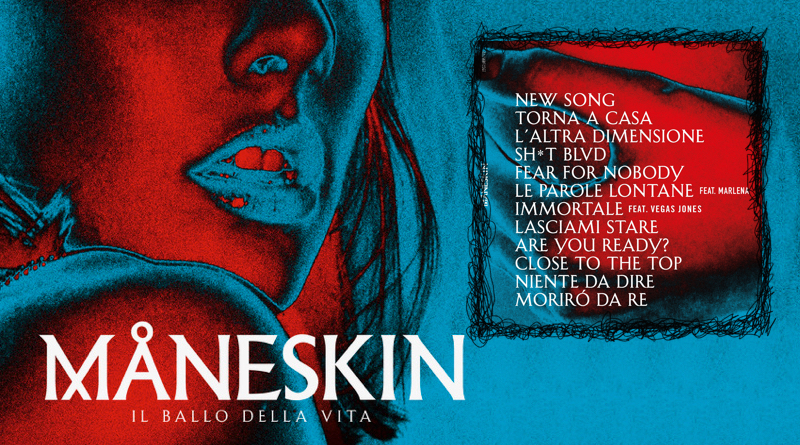
    Do you remember when Horace wrote a poem that would define a whole new genre? Because I do. I'm talking about “The Art of Poetry” or “Ars Poetica”, as he called it. As the best teacher put it, he expressed his opinion about what poetry should be and how the poet should see it. Horace thought poetry goes beyond theory and should be treated as an art. While nobody disagrees on that one, there have been many others who have written about poetry. Some of those turned their verse into music and created concept albums, also known as albums adored by philosophy enthusiasts. One of those is Måneskin's debut, namely “Il Ballo Della Vita”. In the following paragraphs, I'm going to obsess over this one while I talk about Marlena. Disclaimer: this is just an opinion, don't take it too seriously.
   Let's address the elephant in the room: who is Marlena, and why am I so obsessed? Frankly, she is not a real person, but rather a goddess who blesses the band in terms of creative expression. In other words, she's their muse like in the Greek myths. She represents everything about creativity, from the liberating feeling of expressing yourself to the sense of emptiness of burnout. She is also the freedom of thought and the capacity to illustrate it, to give it a form through art. This idea alone made me become obsessed, especially with a few songs. Also, as if to feed this, my best friend gifted me the album on Christmas. I have listened to it for about 3-4 in a day, and I'm very close to learning Italian thanks to this band. But that's already off-topic; let's stick to the concept.
   The album starts with a new song, quite literally. With it comes a new feeling that is naturally accompanied by discomfort. Something is missing, but the new sensation cannot only fill that space but also overflow it. It is a great dream that goes beyond the locked minds, yet something that can be learned if there's a will. Then, in all this confusion, a call to the muse is made and a warning of distance towards those who are “trapped in their minds”. It is a blessing that leaves the writer breathless. But since the past tense is used, he indicates that the muse might be quite distant at the moment. This leads to a flow of contradicting emotions regarding the song of the goddess and wish to create, which is detailed in the second song of the album.
   “Torna a casa” describes the feeling that appears in the absence of art, the emptiness given by the inability to express oneself. In this one, the muse is personified by being given a name, Marlena. In the first part of the song, the lyrics describe a sunset with closed doors and a sun on the horizon. The only image in the writer's mind is that of Marlena's red cheek and the hand that healed his snake bites, despite everyone's curses and his thorns. Then the chorus begs the muse to return to avoid the freezing feeling of disappearing. The second part of the song describes a sunrise that illuminates people's blind spots. However, despite all the hardship, the writer is willing to move forward, learn to forgive themselves, and allow Marlena to improve their life. Still, this song has enough material to write an essay about or join a different dimension.
   “L'altra dimensione” speaks about the joy that follows when we find our voice. The will to create becomes even stronger when we listen to the muse's song. The lyrics start by swearing to pack everything and move to another dimension, tired of everyone's gray faces. The writer wants colours, which they cannot reach amongst people with figures full of sweat. Thus, they ask Marlena to take them for a dance, the dance of life. The creative force has now the power to give birth to new worlds and has also the capacity to heal all wounds. The writer admits having risen from the ashes like a phoenix, and even learning to fly, simply because they packed everything and kissed Marlena. Then we find out the dance of life is led by her, by art and creativity. She can teach the steps as well as a way to fight for such a vision. The carelessness for the outside world leads to the next song.
   “Shit Blvd” details the carelessness that comes with the vision. The writer expresses that they only want to sing their song, though split between desire and hatred. Then we see a reference to Icarus and the desperate will to “fly away”. The words in the mind now make sense, and the muse perhaps trusts the writer more. In the end, it's all a dream that demands to be lived alongside her, a dream where fear should be absent. The boulevard is trying to imprison or limit ideas, but the artist already has wings and is ready to fly fearlessly, as it's detailed in the following piece.
   “Fear for Nobody” goes into detail about the courage to create. The artist is begging themselves not to close their eyes, not to succumb to a narrow vision. The tears have dried out, leading to a sort of numbness that is parallel to the will to express oneself. The writer then admits to having no fear and asks the muse to show him the reason for it. The dream slowly becomes reality and the courage to fight is born. It becomes a unique story that doesn't care about endless disapproval. But what happens when you lose that fire?
   “Le parole lontane”, my personal favourite, details the fleeting nature of the muse and what it feels like not to be around her. When we're writing and feeling as if something's changed, even the air doesn't feel the same. We want to believe it was real, although the anxiety is rising and bringing tears with it. The writer wants to swim, yet not drown because the words feel distant when Marlena isn't around. They want to scream, despite the possibility it might be in vain. Then time burns and changes the nature of creation, which leads to more tears before the storm that turns everything around. Words become futile, so much so that singing is done silently; the feeling is expressed by a mute. The winter freezes and the paralysis becomes fearsome since the legs simply give out. The writer begs Marlena to return to them because, by losing her, they may not be able to walk again. Still, burning oneself out leads to rebirth and maybe even immortality.
   “Immortale” speaks about the invincibility that comes along with creation and the power it brings to the writer. Thus, in a way, it re-writes the myth of Prometheus, who wanted to share the gift of fire and light with the mortal world. Same with the writer of these lyrics, they want to share their gift with those who need it. That's why those who dislike it leave before they have a chance to be touched, they don't want to interact with it. A lesson is to be learned from past mistakes, one that leads to flying high like Icarus. Some take the leap for money, some others for immortality and the joy of being listened to. Even in the darkest of times, the moon guards the artist; they are still standing despite the scars on the back. Because of that, a flower blooms without waiting for the spring. A new big bang takes place, and a new planet or even universe is born. Afterward, confidence becomes indifference to the outside world.
   “Lasciami stare” is all about the freedom and indifference one needs to be an artist. We need to be able to say “leave me alone” so that we can get the quiet necessary to create. The time will pass quicker unless we write the words that nobody said before. We will be considered crazy, but we'll know those who say it might as well be lying. Writing songs, and expressing our minds liberates us from the handcuffs many others accept and even praise. Thus, we'll be able to see that they are tied like puppets. Later, we'll realise that our songs might last forever, and we'll learn to say “Give me a break”. That's when a new will and energy to be reborn, to wash ourselves from the dirt, returns to us. Everyone's masks become obvious while we try to show what's ours. Being told that we're too young, that it's too early, doesn't bother us anymore, but we're aware we're not doing it for fame or money; we do it to ensure our view. But we still have to remember the rhythm.
   “Are You Ready?” asks the listener to be prepared to let their guard down and move with the flow. All one needs to do is remember the rhythm. From that, everything becomes possible; suddenly, dust catches fire, and you are ready to throw yourself into an unknown territory. As terrifying as that risk may be, it is worth trying if it brings you to the top.
    “Close to the Top” acknowledges the ascending way the artist has ahead of them. The clocks say that it's now their moment to shine brightly like never before. Those who chose to stay behind will remain there and cry; those are warned to keep their distance. Then, the fear withers and makes room for growth. The light embraces the darkness, the hatred embraces the acceptance to the point where we've got nothing to say.
    “Niente da dire” discusses the satisfaction with one's art. We want to fly, to hear our names in all the cities; we want to communicate a message and just savor reality for a second. Thus, we learn to let go of the guilt that can seem paralysing, along with all the doubts. That's how we find a cure for the wounds we have. Then the fuel burns, we get hurt and smile because that's how reality is: like the water of the sea that makes everything visible. We find nothing to add or laugh about, other than the acknowledgement of tearing down the thorns and starting to live. So Marlena accompanies the writer on a walk under the moonlight. She is warned not to listen to the mermaid's song because the artist doesn't want to drown either. Fear is thus forgotten, and the honest memory is written as poetry so that the night isn't scary. These are the conditions under which one can die as a king.
   “Moriro da re” is the conclusion to the concept. With exercise comes a sort of certainty of your abilities, a feeling which is detailed in this song. Although everything is uphill, the writer chooses to take Marlena by the hand and redesign the whole world. With the luggage ready, the two plan to shine through the grey night. Along with her, the artist admits they can now die as a king, with all the glory and fame. Not even sickness or tiredness can stop them from advancing like fire, taking everything with them. They are ready to face the crowd and whatever comes ahead; without going back, they prepare to leave. Then Marlena wins the evening with her beauty and honesty. With her, the wind will blow in the sail for a light travel and the artist can die as a king.
   How obsessed am I, on a scale from 1 to 5? Well, considering this is my longest article so far, you can do the maths. Once again, I am THIS close to learning Italian thanks to this band. Do I recommend the album? Yes. Do I recommend following its concepts? Also yes, if you want to learn to express yourself. Now, I'll wrap it up here. Back to the tea and sonnets!
🍵
Maneskin Il ballo della vita  
(source of the image: https://recensiamomusica.com/maneskin-il-ballo-della-vita/)

sâmbătă, 20 ianuarie 2024

Aristotle & Dante

    Why am I attracted to LGBT+ literature like a moth to the flame? I assume it has something to do with the fact that I'm not particularly straight. I enjoy these stories more than their hetero counterparts because they seem less stereotypical and more genuine, they just reflect reality better. Likewise, I guess that's why they seem more raw. One of these stories is called “Aristotle and Dante Discover the Secrets of the Universe”. I would say it is “The Song Of Achilles”, but taking place in the late '80s in El Paso, Texas. Also, I haven't read a book this quickly since TSOA. It still did not make me cry, but it did leave me with an inexplicable feeling. In this post, I will explain why I love it so much. As always, if you don't like spoilers, close the tab.
   For starters, I relate massively to both Ari and Dante. Just like Ari, I don't think I've ever been this close to anyone before meeting my best friend two years ago. Just like Dante, I speak with passion about literature and music. However, I find myself relating more to Ari and his paralysing self-doubt, bottled up emotions, and family dynamics. Dante is very open about everything and expects the same honesty in his relationships. Ari is not, and he feels trapped by this. He feels more comfortable around his mom than his dad, whom he doesn't quite understand, and that's something that I relate to. Also, he stifles his crying until he can no longer and pain becomes “a storm that came out of nowhere”, which is something that I do too. Gods, they know what it's like to be a teen.
   About intersectionality, it's interesting that they are both gay and Mexican. It's rare to see a character represented by multiple identities. Usually, when one is queer…that's it, other identities and the way they affect them are not mentioned. This book doesn't quite play into that stereotype. Exactly because Ari has to figure out everything all at once, he gets lost and frustrated. However, he is more comfortable with his Mexican identity than Dante is. Ari notices that bothers him and even calls him, though jokingly, a “pocho” or a half-arsed Mexican. The flip side of it is that Dante is more comfortable with being gay than Ari is. He's not afraid to say it or kiss a boy, although the latter gets him beaten up (“They cracked more than his ribs”). With Ari, his dad has to bring it up for him to notice.
   That brings me to the next theme: family portraits. In a nutshell, everyone has secrets, except Dante. He is an only child, while Ari feels like one since both his sisters and brother are 11–12 years older than him. Ari feels like the mascot of the family or a stranger, which sends him into an exile of sorts (self-isolation, I assume). Until he meets Dante, whose openness towards his dad seems foreign. Then, they are not only welcomed in the other's family, but their relationship with their parents especially improves. After a death in the family, his mother promises to be honest about Ari's imprisoned brother.
   After he finds out his brother killed a man with his bare fists, he becomes very curious about his dad's past too. In a beautiful scene, the two come out of the closet to each other: Ari as a gay man and Jaime, his father, as a traumatised war veteran. Ari was so consumed by every other problem that his dad brought up his sexuality, and specifically his instincts. After that, they understood each other. Honestly, that's a lovely message to send. Yes, saying the truth can and probably will hurt, but it's even worse if it's hidden and bottled up until the glass breaks.
   Another thing that I love about this is the psychological aspect with all its wounds. It's so obvious, but everyone has flaws, including our best friends, including our parents. Dante's greatest strength and weakness is his stubbornness, which leads him to be occasionally authoritative and win almost every argument. Ari's greatest flaw is his crippling self-doubt and anxiety. Still, his instincts don't lie. When Dante doesn't hear him calling his name, Ari's first impulse is to push him out of the way of a car.
   Afterward, because he has three limbs in a cast, Dante offers to bathe Ari. Dante cries, and Ari wants to do either that or hit Dante; he hates his openness as much as he hates himself. Likewise, when Dante is beaten up, Ari breaks the nose of one of the abusers. By the way, since Ari is the narrator, I love the beautifully tragic way he describes Dante's swollen, almost unrecognisable face; he could barely look at it. As a result of that, their parents guessed they were most likely romantically in love (“The way he looks at you”).
   All in all, do I recommend it? Yes, otherwise your bookshelf will be as sad and lonely as Ari's rocking chair. Do I have a favourite character? Not necessarily, though I do relate massively to both Ari and Dante. I'll wrap it up here with a few quotes I enjoy. Now, back to the tea!
🫖 

Aristotle and Dante Discover the Secrets of the Universe Fan Casting on ... 

(source of the image: mycast.io)


“WHY DO WE SMILE? WHY DO WE LAUGH? WHY DO we feel alone? Why are we sad and confused? Why do we read poetry? Why do we cry when we see a painting?” 

“The problem with my life was that it was someone else’s idea.”

“Maybe someone should have told that guy that we all weren’t ten-year-olds anymore.” 

“For the music to be over so soon. For the music to be over when it had just begun. That was really sad.”

“Fifteen-year-olds don’t qualify as people.”

“It was a small idea. But at least the idea was mine.”

“Mom, she got my sense of humor. I got hers.”

“WHEN | WALKED INTO THE HEAT OF THE DAY, EVEN THE lizards knew better than to be crawling around.” 

“Mascot. Great. Ari, the family mascot.” 

“Being fifteen didn’t help. Sometimes I thought that being fifteen was the worst tragedy of all.” 

“His eyes lit up. I mean, the guy was ready to listen to every word I said.” 

“I was ashamed of myself for being ashamed of myself.” 

“And really, he didn’t look like a professor. He was young and handsome and easygoing and it seemed like a part of him was still a boy.” 

“ My mom and I, sometimes the thing we had between us was easy and uncomplicated. Sometimes. But me and my dad, we didn’t have that.”

“  I got to thinking that poems were like people. Some people you got right off the bat. Some people you just didn’t get—and never would get. ” 

“Until Dante, being with other people was the hardest thing in the world for me. But Dante made talking and living and feeling seem like all those things were perfectly natural.”

“Do you think it’s bad—to doubt?”

“No. I think it’s smart.” 

“I noticed his smile was a little sad. Maybe everyone was a little sad. Maybe so.”

“Words were different when they lived inside of you. “

“ I wanted to talk, to say something, to ask questions. But I couldn’t. All the words were stuck in my throat.”

“In your dream. You were looking for me.”

“I’m always looking for you,” I whispered.”

…and many, many others.


duminică, 24 decembrie 2023

Sonnets to Sing

    Happy Holidays or Whatever. It's time for more sonnets because I'm a bit obsessed. As usual, you will see some related to certain movies (e.g.: “Dead Poets Society”) or books (e.g.: “The Song of Achilles”) because they are just that great. As they say: “Good writers make you join their worlds; the best ones make you want to create your own”. Be prepared for lavender because I'm not particularly straight. Also, some have a Romanian version because they are fun to write anyway. Why not have sonnets in that language too? Anyway, I hope you enjoy. 

1. Eyes
Some people's eyes stop at clothes and tattoos
And refuse to see beyond such surface;
Still, I look past all these taboos
And thus find the mind's rich space.
I'm often looking in from the outside
Because that's how you observe the worst and best;
From the others' broken mirror, you see your own shards aside
And put the heart's golden thread to a test.
If I could hear thoughts, I'd surely bet
That I would meet each every judge
Who, to fix the world, is always set
And who knows nothing but to endlessly indulge.
I stand up high, naked, while looking down
And spitting on such a vain crown.
 
2.  Painting
Across the body, the mind winds its story
And the heart adds melody to all of it:
It sings of the times with high glory
As well as the ones when the serpents bit.
With ink and needles, I often draw on my skin
Those sparks and symbols only known by me;
Memories will fill that canvas in
As the masterpiece I slowly begin to see
And so I try to wear my heart on the sleeve,
Despite guarding it so bloody carefully;
Though it sometimes wants to leave,
The swift drum obeys the head fully.
Thus, I tell my story without a single word
And begin to fight without a single sword. 

3. Streak of Lavender
The lavender that brought such a scare
Is luckily regaining its acceptance;
To love, some simply wouldn't dare
For the light fears the shadow's resistance.
Poor Patroclus and his streak of lavender, 
He failed to defeat the all-mighty Hector;
Poor Achilles and his teardrops, so tender,
When facing gravestones, he would hear no lector.
Lavender, too, grows in the emperor's garden
Because he adores its scent and colour;
Ai of Han ought to always broaden
All the splendours of what he loves to savour.
My pen serves as my golden sceptre
Because, without it, I couldn't walk a metre.

4. Flight
The snow is traced with the ashes of many
Who touched the sky, yet were quick to hit the ground;
Still, I seem to be unlike any
For their yelling, to me, makes no sound.
I touched the sun, went blind and regained my sight
So that I can see beyond any face or reason;
Though nothing seems to hinder my flight,
Feathers of the wings have suffered the treason.
Some keep watching while spitting again on me,
Others listen, my plumage admiring;
Either way, they are free to come and see
The road built ahead of my arising.
Beyond tattoos and scars, some cannot see
The painting that lies inside of me.

5. Ode to the Cat
His blue eyes stared at the void of mine,
Probably wondering if it's loneliness;
Yet his tail coils around me like a grape vine,
Thus finding a cure to any sadness.
The cat assists me like any other poet
And is a god that few sing about;
His mystery helps me write my sonnet,
Even when I have thoughts I don't speak aloud.
The snow of his fur, the sapphires of his eyes
Always paint my morning's mood,
Even though he never runs after mice
And often sings to get his food.
The cat's freedom adorns my room
And rids me of any possible gloom.
 
6. Heart of the Art
Poetry heals all accidental or intentional cuts
And helps in taming each and every storm
That starts whenever the wires take the shots
That alter the mind's best form.
Pink scars on pale skin
Cry out for a trusted counsellor indeed;
Still, they are sewed in wires of tin
That allow no growth or little seed.
Only poetry stitches and stops the bleeding
Of the head and tongue during a hurricane;
And so the heart engages in a ballet of feeling
That transforms me into a singing crane.
Only poetry calms a raging storm
And heals bleeding, regardless of its form.  

7. Maglor
I look at the sea that shimmers in moonlight
As I curse the jewel that sank beneath a wave;
A snake became of this empty fight
That holds me still, though I will not see the grave.
I can see my brothers smiling through the stars:
Maedhros and hid fire, the twins forever in disharmony;
It is a pity the wheel left many scars
That cannot yet be rubbed with honey.
I am cursed and blessed to be left behind,
Despite my hand that still bleeds heavily;
In time, my burn a cure will find
But my head may not heal so steadily.
Why do I try too hard to even exist
When all I see around me is a dense mist?
 
8. A. Nine of Swords
 A corpse was brought before his bright eyes,
Truly unrecognisable at his first glance;
But he tore the armour and its lies
And almost felt his heart stopping its dance.
Achilles' eyes soon became bloodshot and numb,
As tears began to conquer his heart;
He could feel his chest's irritatingly quick drum,
As he wished not to see the next dawn's start.
His voice cracked and broke in his throat,
As “Patroclus” was the only word he'd say;
At last, Charon waited for him in that boat
To, perhaps, reunite with me one day.
What is worse than being left alive
When you have nothing to help you thrive?

B. Nouă de spade
Era un mort în fața luminii ochilor lui,
Unul ce nu recunoștea din prima;
Dar a smuls armura, minciunile oricui,
Și aproape nu își mai putea simți inima.
Ochii lui Ahile erau tot mai roșii în amorțire
Când tunica i se umplea de lacrimi;
Simțea a pieptului tobă și insistenta ei lovire
Nedorind să mai trăiască ale zorilor patimi.
Se aude a lui voce răgușită și spartă
Cum "Patrocle" era singurul cuvânt ce spune;
Apoi Charon în a nemuririi barca îl așteaptă
Pentru a scrie în piatră un al II-lea nume.
Ce poate fi mai rău decât să fii lăsat în viață
Când ești strâns legat de a neliniștii ață?

9. Ricardo Reis
It is not the gods that I often abhor
But those who argue on who's the best;
That who says the other is a whore
Forgets we live in the same nest.
Christ is no better than Apollo or an Emperor or Jade,
Although he's portrayed to be tediously flawless;
Yet nobody can master such a trade
And become, to the followers, simply lawless
I sit in-between, watching them spit and fight
While I carelessly drink my daily cup of tea;
This war of philosophy reaches an absurd height
Because it goes beyond each and every sea.
I've never cared for whom the gods send
Or who has the best imaginary friend.
 
10. Lyre
His fingers touched the chords with softness,
Casting his spell upon the one who's listening;
Patroclus marvelled, though with shyness,
And almost felt as if struck by lightning.
He knew Achilles' voice from a great distance:
A crystal so uneven, yet so incredibly clear;
A song, a smile, and it was his entire existence:
To seek, to speak to a soul so dear.
All by himself, Achilles plays the lyre again
With scars and tears all across his body;
His Philtatos was to his pride slain
And he is left to feel the warmth of nobody.
Achilles stares at the lyre's golden adornment
And weeps again, reminded of endless torment.

11. Days Off
Days off feel like a breath held for too long,
As if a war was dawning upon this land
But this region only knew it in song
And in the blood fallen on the border's sand.
There is numbness to it, more than I desire
Because I can't feel as strongly as in the past;
Despite how brightly burns all the fire,
I'm losing the hope that it will last.
My shoulders keep their tension anyway,
Regardless of the day or night, year or month;
It is a free day, in December or in May,
And I still wander as nothing but a moth.
It was a day off, and it felt so strange,
As if I was constantly kept in an open cage.

12. Numbness
There's numbness I cannot explain
Because it fills the emptiness inside of me;
It feels as if it's about to drain
A large body of water I fail to see.
A violent rain brings to waves all the sorrow
And causes them to rage against one ship;
It happens beyond the surface, always below, 
Until the ocean has sailor blood to sip.
It's all quiet now, though any feeling is dead,
Before the trident is used once again;
Drowning is where all this mess led
And I should find a way for it to explain.
I can't feel as strongly as I probably should
Because to let myself be consumed, I never could.
 
13. Lavender 
Lavender grows wherever it pleases,
Through water and desserts, dark and light;
Each drop and second, it often seizes
And through whirlwinds, it dares to fight.
No terror or gas can stifle it completely,
For its purple petals are always left behind;
Nothing can kill its roots entirely
Because, usually, they under boulders hide.
Men who kiss each other hide in purple fields
Because it's their only way to escape
And drop their knives, spears, or shields
While freeing themselves from the old shape.
Lavender is a scent that I admire
That pushes me to write as I aspire.

14. About Friendship
Like bears who share their honey
Or cats with a more quiet, cold feeling,
People often spend some money
To strengthen the friendship's sealing.
I buy books or albums to those with a similar taste
For the sheer pleasure the act brings to me;
But I see it is, among us, a common trait,
A way to avoid drowning in the indifference's sea.
I give without needing to receive
Because from it, I feel such a great pleasure;
Yet it is a gesture some seem to retrieve
Because the joy of it is for everyone a leisure.
I don't think I could live without any friends
Because I could meet the world's various ends.
 
15. A. Neil Perry 
A bright sun shines upon his head and heart
Shimmering through the smile often on his face;
He brings light where others see darkness in art
And always warms others in his embrace.
He's an actor, in and out of the theatre of wrath,
Who wears Puck's crown, usually proudly;
He wants to feel himself through this path,
Although, it could prove to be rather deadly.
In his father's chair, he chooses a bullet
And closes his eyes before the open window;
In the blood of his heart, he signs his sonnet,
And ends up leaving his friend in limbo.
He knows life cannot be lived without art
And lets the bitter blood pour from his heart.

B. Neil Perry 
În minte și inimă, vezi adesea soarele
Strălucind prin zâmbetul ce-l are pe figură;
Aduce lumina unde alții văd numai durerile
Și încălzește pe oricine cu a lui privire sigură.
E un actor, înăuntrul și-nafara teatrului mâniei,
Ce poartă a lui Puck coroana și trăiește în arte;
Pe această cale, vrea să simtă mândria expresiei,
Deși conștient că-l poate duce la moarte.
Pe fotoliul tatălui, un glonț alege onestul
Și își închide ochii la fereastra cea deschisă;
Cu sângele inimii își semnează sonetul
Și lasă, în camera prietenului, lumina stinsă.
El știe că viața nu poate exista fără artă
Și lasă amarul inimii să deseneze o hartă.

16. Hadrian
Hadrian strides through the empty halls,
Trying to find one person specifically;
He hears no breath or answer to his calls,
But only finds the tunic of Antinous, essentially.
The yell turns into a tear and then another, 
Feeling each of them in the heart like arrows;
Every servant or senseless word was a bother
As nobody could extinguish his sorrows.
"Antinous!" he wails into the void's emtiness
But it slowly, slowly becomes sound only;
His numbness begins to turn into deafness
As he will not hear the song of the lonely.
Hadrian weeps, staring the tunic's adornment,
And is always reminded of his endless torment.
 
17. Ice
 Looking outside, the windows are frozen
Because the winter kissed by flat as well;
I count its wonders to be about a dozen,
Including its whispers through every bell.
Through ice, I often see more clearly
Because snow quiets every conflict;
It is a season I hold quite dearly
Because I forget the wounds they inflict.
It's spring again when yelling breaks the ice
And the same fights keep exhausting me;
In this time, I start to play the dice
To choose what's the luck that I will see.
I smile at the winter's distant words
And admire all its different worlds.

18. Mermaid's Song
As I open the windows, I hear a sound
That's so familiar, yet odd as a distant land;
It breaks bones and glasses because it's so loud
That it reduces all it reaches to mere sand.
Yet it calls me, as the mermaids Odysseus,
To listen to its symphony without words;
Though it's something often deemed as tedious,
It's also something that fills and creates worlds.
Alas, I start to write my sonnets to sing
To bring the rainbow to gray faces;
It's through words that ideas can ring.
And leave in a binary world colourful traces.
I sing the glory and sorrow of all the poets
While of iron I craft most of my sonnets. 

Orpheus at the tomb of Eurydice Painting by Johann Peter Krafft - Fine ...

(source of the image: https://images.fineartamerica.com/images/artworkimages/mediumlarge/3/orpheus-at-the-tomb-of-eurydice-johann-peter-krafft.jpg)


sâmbătă, 25 noiembrie 2023

Reminder to Love Mythology

    Why do I love mythology so much? I've been asking myself this question ever since I became obsessed with anything even remotely related to Percy Jackson. Is it the relatable stories? The symbolism? The incredibly human nature of the gods and their children? The concepts about identity? Maybe the modern retelling? Honestly, I don't think I'll ever have a precise answer to this. Still, I cannot deny its influence in my life. I have discovered many things about myself through the lens of mythology. For instance, I realized I might be non-binary or gender-fluid when I read about Loki and his shape-shifting powers. However, I'm not here to write about Norse myths yet. I'm instead returning to where it all started, namely Greek mythology. In a nutshell, “The Song of Achilles” played with my heart's strings in the same way Achilles played his lyre: gently. Though I didn't cry, I was still moved and want to explain why. As usual, if you don't like spoilers, cover your eyes.

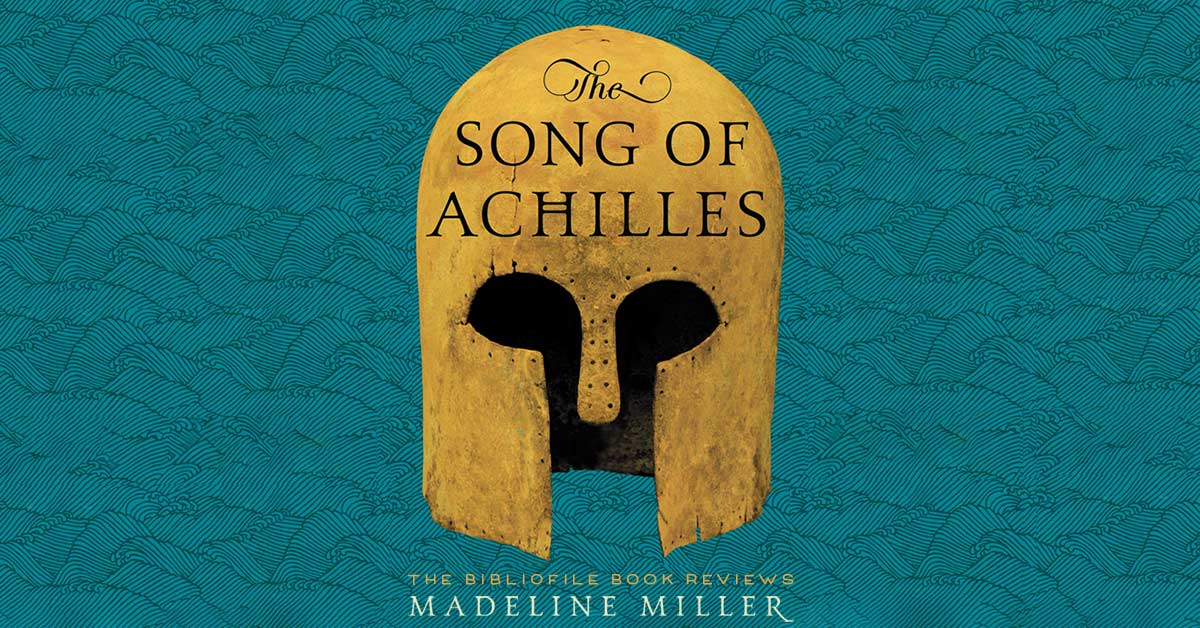
   I appreciate the way everything was described. It felt as if a poet started storytelling because even the most tragic of scenes were described beautifully, yet simply. The death of Patroclus and the reaction of Achilles to it felt piercing, yet poetic, like in a Shakespearean tragedy. Naturally, the imagery becomes vividly detailed. You can hear Achilles scream, whisper and weep at the sight of Patroclus' bloody corpse. You can feel his grief and sleepless nights. On the other hand, there are also scenes that talk about the sheer joy of being around each other. Each moment when Achilles plays the lyre is one of those, whether it's during their childhood or wartime. In these, Patroclus seemed to be almost spellbound by the other's mastery of the instrument, the clearness of his voice, the gentle way he touched the strings. Hell, even the “spicy” scenes are described so poetically that I, an asexual, was almost unable to tell it was about to get sexy. Again, from an aesthetic point of view, I could bet this book surpasses other debut novels. 

   Another thing I adore is the way the characters are presented. We are too used to seeing the classical heroes as exorbitantly, or even toxically, masculine: Stoic, close to emotionless, valiant warriors. But “The Song of Achilles” has a quite different approach, since the saying “boys don't cry” doesn't seem to exist here. It brings to light a side of Achilles that was not explored as much before, namely his heart. He knows how to hide his emotions, as well as when and how to express them. He smiles a thousand times along with Patroclus, yet cries a river at his most beloved's death. Also, despite their contrasting personalities, they appreciate each other greatly. Odysseus is sarcastic or even cocky, but also talks sweetly about his wife. Agamemnon is a courageous general, yet sensitive to the blood-sealed warning of Patroclus. Even the gods are portrayed in a human manner, typical to most types of mythology at the time. Thetis loves her son deeply and hates his beloved just as deeply, mainly for his mortality. Additionally, the deities take sides during the Trojan War. Apollo, for instance, brings a plague upon the Greek army and, later, the downfall of Aristos Achaion and his Soulmate, which, I would say, is fascinating.

    The philosophy adds to such beauty. It would be unfair to say it is merely about war and love, since it goes well-beyond that. Though briefly, Patroclus' direct, yet poetic, descriptions discuss the types and effects of each. He loves Briseis, but not in the same way he loves Achilles. He also senses how this affects her, though she doesn't show it much. Seeing Patroclus' dead body, she calls Achilles self-centred for not realising that others could have loved his Philtatos as much as him. Then Achilles, probably, asked himself with resentment: Why? Why did I let him wear my armour? Why did I have to seize this war and its glory? Wherefore did I have to choose my pride over him? Wherefore did I have to be the catalyst for both of our fates? He ponders and finds no answer, neither from within nor without. Honestly, it's intriguing how a single person can have this huge influence over another. Practically, it reinforces the idea that ordinary people can do extraordinary things, no matter how small they may seem, as the author herself has said. That, I think, is a lovely thought to present.

   Also, as a queer person, to read a book where the representation is so casual feels almost surreal. They aren't damned nor praised for their morality, they just are. They are seen as regular people, as much as Greek heroes can be. Once again, it humanises them to have their hearts and minds as the main focal point of the story. They love each other deeply, passionately and if this comes across to you as a hetero bromance, then I would suggest reading it again, without bias. I thrive with LGBT+ casual representation, especially in literature. I've been craving this kind of thing ever since I got into Alison Bechdel's work, not to mention that the history or mythology related to this community fascinates me. In this aria, I have nothing at all to add. It's simply great.

   All in all, do I recommend it? YES, it's a good mythological retelling. It's definitely one of the books I'll keep returning to, as are Pessoa's “The Book of Disquiet”, Tolkien's “The Silmarillion” and Wilde's “The Picture of Dorian Gray”. Reading TSOA felt like listening to Måneskin's “Coraline” or Taylor Swift's “Ronan”: it did not move me to tears, but it did make me feel something unexplainable, a sort of beautiful sadness. Do I have a favourite character? I don't think so, though it's humanly impossible to be unable to relate to the narrator: the voice of doubt, of anxiety confronted by Achilles' voice of confidence; occasionally a raven on the hero's shoulder. Whose fearful mind cannot relate to this? Anyway, I'll wrap it up here with a few quotes that I adore. Now back to the tea! 🍵

Summary and Review: The Song of Achilles by Madeline Miller - The ... 

(source of the image: https://the-bibliofile.com/the-song-of-achilles/)

“I hope that Hector kills you." The breath rasps in his throat. “Do you think I do not hope the same?” he asks.”

“Achilles does not regard me.” Her voice trembled a little. “Even though I bear his child and am his wife. Do you know why this is so?” It was a child’s question, like why the rain falls or why the sea’s motion never ceases. I felt older than her, though I was not.”

“I am air and thought and can do nothing.”

 “With a roar, he throws Antilochus from him, knocks down Menelaus. He falls on the body. The knowledge rushes up in him, choking off breath. A scream comes, tearing its way out. And then
another, and another. He seizes his hair in his hands and yanks it from his
head. Golden strands fall onto the bloody corpse. Patroclus, he says,
Patroclus. Patroclus. Over and over until it is sound only. (c. 31)”

“FOR THE FIRST TIME since my death, he falls into a fitful, trembling sleep.

Achilles. I cannot bear to see you grieving.
His limbs twitch and shudder. 
Give us both peace. Burn me and bury me. I will wait for you among the
shades. I will—

But already he is waking. “Patroclus! Wait! I am here!”
He shakes the body beside him. When I do not answer, he weeps again.”

“I have done it,” she says. At first, I do not understand. But then I see the tomb, and the marks she has made on the stone. A C H I L L E S, it reads. And beside it, P A T R O C L U S.
“Go,” she says. “He waits for you.” 

“We reached for each other, and I thought of how many nights I had lain awake loving him in silence.” 

“This, I say. This and this. The way his hair looked in summer sun. His face when he ran. His eyes, solemn as an owl at lessons. This and this and this. So many moments of happiness, crowding forward.”  

“Odysseus inclines his head. “True. But fame is a strange thing. Some men gain glory after they die, while others fade. What is admired in one generation is abhorred in another.” He spread his broad hands. “We cannot say who will survive the holocaust of memory. Who knows?”

“Chiron had said once that nations were the most foolish of mortal inventions. “No man is worth more than another, wherever he is from.”

“But what if he is your friend?” Achilles had asked him, feet kicked up on the wall of the rose-quartz cave. “Or your brother? Should you treat him the same as a stranger?”

“You ask a question that philosophers argue over,” Chiron had said. “He is worth more to you, perhaps. But the stranger is someone else’s friend and brother. So which life is more important?”

We had been silent. We were fourteen, and these things were too hard for us. Now that we are twenty-seven, they still feel too hard.

He is half of my soul, as the poets say. He will be dead soon, and his honour is all that will remain. It is his child, his dearest self. Should I reproach him for it? I have saved Briseis. I cannot save them all.

I know, now, how I would answer Chiron. I would say: there is no answer. Whichever you choose, you are wrong.” 

“We are all there, goddess and mortal and the boy who was both.” 

“Have you no more memories?”
I am made of memories.
“Speak, then.”

 “He holds me so tightly I can feel the faint beat of his chest, like the wings of a
moth. An echo, the last bit of spirit still tethered to my body. A torment.”

“I stopped watching for ridicule, the scorpion's tail hidden in his words. He said what he meant; he was puzzled if you did not. Some people might have mistaken this for simplicity. But is it not a sort of genius to cut always to the heart?”  

“The sorrow was so large it threatened to tear through my skin. When he died, all things swift and beautiful and bright would be buried with him.” 

“When he speaks at last, his voice is weary, and defeated. He doesn’t know how to be angry with me, either. We are like damp wood that won’t light.”

“Perhaps he simply assumed: a bitterness of habit, of boy after boy trained for music and medicine, and unleashed for murder.”  

“His mother comes. I hear her, the sound of waves breaking on shore. If I
disgusted her when I was alive, it is worse to find my corpse in her son’s
arms.” 

"Therapon was the word he used. A brother-in-arms sworn to a
prince by blood oaths and love. In war, these men were his honor guard; in
peace, his closest advisers. It was a place of highest esteem, another reason
the boys swarmed Peleus’ son, showing off; they hoped to be chosen." 

“For many years now, Achilles, I have urged companions on you and you
have turned them away. Why this boy?”
The question might have been my own. I had nothing to offer such a
prince. Why, then, had he made a charity case of me?  Peleus and I both waited for his answer.
“He is surprising.”
I looked up, frowning. If he thought so, he was the only one."

joi, 5 octombrie 2023

Senseless Sonnets

    Boo! It's October, it's time to get our hands on the best horror stories and the most dramatic gothic poetry. Truth be told, I'm not that good at writing. But I've been obsessed with sonnets since the end of July and I've written a fair share. So I thought it's a good idea to post some of them here. As always, the only ones who had to suffer were YouTube's musicians, with their eternally poetic lyrics, and my poor Tarot deck, which often pulled me out of a creative block.
 
 1. Aries
I am alone on a different planet
Where I sought a thought, but simply lost;
That's why I forgot to write a sonnet
For each soul that I host.
I can see Mars with my mind's eye
The way I saw the Albert Hall the other day;
But it's simply another lie
I tell myself for here to stay.
My planet has flowers that never bloom
Under the wrath of the seas;
But sturdy violet and lavender fear no gloom
As they appear before the wise trees.
My mind is only a planet
That helps me not forget my sonnet.
 
2. Tempest
A whirlwind that collides with the sky
Unites the land and water;
But so high I fly
That it doesn't even matter.
As above, so be it below:
A hurricane, unstoppable at all
Since I got so low,
I expected this fall.
It's a storm that I've only seen in dream;
Oh, my most beloved nightmare!
Only the grim, conscious stream
Can light the poison of such flare.
Am I being manic?
Do I only know panic?
 
3. Heartbeat
I'm thinking and thinking, it's draining
As some act like I don't exist;
But I can't blame them for such training
Since I, too, would throw to my face a fist
I hear a hum, the sound of a drum
That is about to tear my chest apart;
If only I wasn't so numb
To such painful works of art.
It's quiet, yet so loud
The sound of a heartbeat;
If only I wasn't chased by the hound,
I would seek a way for it to treat
Will I find my way out?
Will I simply escape with a shout?
 
4. Wildfire
In a nearby forest was a fire
That nobody knows who started;
It's said there was a pyre
For a poet so ill-hearted.
He was standing on the gallows
Because of the torture of his will;
He wished to go through the shadows
Without putting his mind through a mill.
And so he burnt among living corpses
So he could finally be free,
Although few were the forces
That encouraged him to flee.
I stand on his high rooftop
Where the powerful wind helps me hop.
 
5. Hurricane
I feel a hand tightly holding my neck
And it's not only breath I have no longer;
It's the many mates leaving my deck
For to sail I'm no longer eager.
I feel like I'm a weightlifter,
Only my barbell resembles a cloud;
But how I wish I was a shapeshifter
When the tempest was too loud?
This sickness keeps me so blind,
It's poisoned much of my brain;
It's also one of the kind
That only knows to drain and drain.
Yet nothing seems to do me
On this road, I cannot see.
 
6. Hymn
Sing to me, goddess, rhymes long forlorn
Of distant days older than time,
Days when each word had a thorn
And each torn could find its rhyme.
Sing to me of Patroclus defending his lover
And turning upside down the depths of hell;
Sing of Achilles falling lower and lower
And returning with a smile and yell.
Play along with violent violin strings
The song painting Hadrian's grief
As he threw all his golden rings
In the river where Antinous lies stiff.
Sing to me, goddess of human nature,
All the possible rhymes of tears and fortune.
 
7. Alien
I sit naked on the top of a tall building
And wonder what's it like to be down;
I would give up all my shielding
Rather than let myself drown.
I haven't sold my soul yet
To the love of diamonds and gold;
Quite a few people I had met
Have not told this tale of old.
They all see the marks, tattoos, and piercing
And think I'm the boldest of the freaks,
Yet the point they keep missing
Is that it's not the flashlights I seek?
Should I tell them stones can't reach this height?
Or should let them senselessly fight?
 
8.  Existence
"Why am I this way?"
It's a question I've asked myself many a time
And I can keep asking it until May
But I still won't find its rhyme.
I might have some unknown virus
That sends me on the edge once again;
I feel like I'm in a circus
And I'm being looked at as if I were insane.
Though nothing seems to pierce through me
As I have no scars at all,
I have never felt as free
As I was during the fall.
Will I look up or down?
Will I stay afloat or just drown?
 
9. Cage
Between the ribs that formed a prison,
There was a heart with a beat so swift
That it knew little to no reason
And that never found rest, so sweet.
It pounded and pounded whenever
The mouth was locked away;
It could also easily sever
The breath left as prey.
It bites the tongue and brain
And makes the gut only overactive,
Though it doesn't bring much pain
Since it doesn't ask for a sedative.
Oh, racing mind and heart,
Teach me the way of this art.
 
10. Lost
I feel I'm about to get lost
Through the fogs and cogs of this machinery;
Still, I only feel the cost
Of this contest of archery.
Everybody starts to aim their arrows
Straight to the hearts and minds
Of those who sit in the gallows
Until the reaper begins its rides.
Their chests bleed and forget to breathe
As the mouths tremble and hold their speaking;
The brain starts fighting beneath
The words that were always reeking.
In this life, I feel like a terrible host
But I also feel I'm about to get lost.
 
That's it for the moment. Now, back to the tea!🫖 
The Magician and the Trance – Esotrance - Sociedelic  


vineri, 8 septembrie 2023

The Uselessly Gendered Cartoons

    Is it just me or does anyone else feel like it's weird to assign genders to cartoons? Am I the only one whose brain just went "f*ck off" upon finding out about this or is it just a universal non-binary experience? Some cartoons I grew up watching were meant for boys (think "Generator Rex", "Johnny Test", "Robotboy", etc.) while some others were meant for girls (think "Bibi & Tina", "Totally Spies", "Strawberry Shortcake", etc.)...but why? What makes "Samurai Jack" boyish and what makes "Holly Hobbie & Friends" girly? Let us investigate. (Quick disclaimer, I'm not an expert. I'm merely an androgynous person expressing some opinions.)

   For starters, we need to look into gender roles. Even though a few cultures are traditionally binary in terms of these, it wasn't until the rise of the Abrahamic religions and colonialism that this heteronormativity became almost oppressive. Once Christianity gained popularity, gender identity became binary and each one had a defined role. Men were supposed to protect and provide for their family or community while women were supposed to marry and reproduce as soon as possible since fertility was a crucial concept back then. Those who challenged this view in any way were considered sinners and, in the worst-case scenario, tortured or executed. So began the age of gender expectations that unfortunately continues to this day, although in most Western countries the only punishment you get nowadays is an angry comment from a boomer or so.

   I think this mentality is instilled into people from a pretty young age and one way of doing it is by inserting certain ideas into cartoons, books, movies, and TV series. That's why most cartoons that are action-based or involve logic are considered for boys while those based on feeling are considered for girls. Also, the character design and colours are divided similarly. I'd imagine it goes like this: if the shades involve colder colours and the design is realistic, it's probably meant for a male audience. Again, this is based on the assumption that strength is equal to cold logic and the muscles of a weightlifter while weakness means showing feelings and being affectionate (which is bollocks imo). This leads to harmful ideas such as suppressing emotions to look masculine or not choosing a career in science to look feminine. But luckily, there are people and pieces of media that challenge this idea.

   Now, let's talk about a movie that I think was ahead of its time, namely "Mulan". Gods, do I love this movie. It defies traditional gender roles in every way, from the failed visit to the matchmaker to the killing of Shan Yu. Of course, we cannot talk about these without bringing up "Reflections". It's a lovely metaphor for, dare I say, coming out of the closet. Mulan doesn't see her reflection in the mirror, but she does truly see it in the sword. She then cuts her hair, which I reckon was a symbol of banishment, and is off to bring honour to her family. In the battle against the Huns, during an avalanche, she saves the army's strongest man, the general Li Shang. Later on, to sneak into the palace, Yao, Ling, and Chien Po dress up as concubines (aka do drag) to act upon Mulan's plan. She needs both her feminine and her masculine side to defeat Shan Yu since she uses both a fan and a sword for it. In the end, the whole forbidden city bows to her after she literary embraces the dragon. If that's not empowering, I don't know what it is.

   On the other end of the spectrum, "How To Train Your Dragon" does a fairly good job of defying the norms. Hiccup wants and tries to fight, but is physically unable to. When Stoic the Vast hands him the axe, its weight almost crushes Hiccup. That's why he used his wits to craft a weapon and catch a Night Fury. However, when he sets out to kill the dragon, he ends up liberating it from the net. He followed his heart and couldn't bring himself to take its life. As much as he tries to hide his fright, he faints after the encounter. From then on, he starts studying the dragon and wondering if he can help it regain its flight. Of course, his bookish behaviour isn't taken seriously until he proves, by winning a local contest, that kindness and knowledge can also be powerful. He won the contest without killing a single creature, going against the norms of his society. Considering these are the Vikings, I suppose men weren't exactly expected to be more than brawns. But once again, I'd say it's still empowering.

  If Disney and Dreamworks can, why can't other companies do it too? Oh, I know! It's because the critics will say the characters lack personality. Newt Scamander is often criticized because he is "boring and lacks masculinity". Besides, some say that challenging traditional roles is indoctrination and promotes the gay agenda™. However, heteronormativity is so integrated in media that few people see it as a problem or even as a form of indoctrination. People go mental when you, say, do a queer reading of "Encanto" or a wlw relationship is confirmed, but will probably not mind tropes like "the damsel in distress" because it's been used for so long. When a piece of information is repeated for a long time, many regard it as the truth. When it is challenged, the response is usually resistance or fear. Will this vicious cycle ever end? I don't know. But there's hope in the fluidity, adaptability, and tolerance of Generation Z.

   Alright, I'm going to wrap it up here. In addition to feeling like I took a boulder off my chest, I sure had fun writing this. I'll end this post with a few sonnets, as it's a new obsession. Now back to the tea and don't forget to eat your vegan Ramen!🫖

Pride Flags 

(source: unco.edu)


1. The Hanged Man

Achilles tears apart the armour of blood,
As Patroclus lies dead in the dark of night;
Tears fall on his face as in flood,
Letting out a shout that trembled Hades in fright.
Nothing could stop him, in anger or grief;
He wanted his and Hector's throat cut,
Even for a moment so brief,
Until his own eyes quietly shut.
Achilles took his armour, in the battle to stride,
To avenge Patroclus, his dear;
The name called for a new pride,
Despite the Fate's rolling tear.
When an arrow strikes his heel,
He is left with a smile to feel.


2. Possession

The only thing the king knows
Is the golden spark in his eyes;
His crown holds coins meant for the crows,
Coins that often strengthen hidden ties.
Gold at crown and Gold at heart,
But never in a way meant to last;
"He's possessed!", sings the bard
Before losing his sight so fast.
All he cares about is finance
And the many ways to spend little;
But rarely finds a balance
For these matters so brittle.
Will he bequeath his crown of gold?
Or will he wear it until it's sold?


3. Strength

I approach the lion with much kindness,
As I never feared any such beast.
But I do not approach in blindness
For his teeth are ready to feast.
I play with a cat, only slightly larger,
And it's worth I never failed to see;
For I was never a soldier
And Leo has never hurt me.
I never felt as bold
As when his teeth I cleaned;
He gave his head for me to hold
And slowly, towards me, he leaned.
Force isn't something you need 

When a friendship you try to feed.

vineri, 1 septembrie 2023

"Tabacaria" vs "Opiario" And My Eternal Obsession With Fernando Pessoa

    I said that I would write about these as soon as I read them. Considering my immense obsession with Pessoa's work, it was inevitable that I would eventually take up “A Little Larger Than the Entire Universe”. I haven't finished it yet, but I already have a few favourite poems (“The Chess Players” and most of Ricardo Reis' poetry; “Opiary” by Alvaro de Campos, etc.) and a few I wish were included such as “The Tobacco Shop” and “Antinous”. But I'm not here to discuss LGBT+ literature yet, even though de Campos' mere existence is LGBT+ literature. I'm here to ask what's the difference between an opiary and a tobacco shop and why am I so obsessed with this? Let us descend into madness and decipher this mystery.

   Let's start with what they have in common, aside from the decade of publication: existentialism, pain, and escapism. In both poems, de Campos is in pain simply because he exists and thinks about it. He laments his fate and says it is all an empty facade, nothing but pretending. He sees himself as a mere naval engineer amongst many others, sitting by a window like many others. He wants to escape, to dream once again, which is why he takes his drugs of choice: opium and tobacco. Just as Bernardo Soares has done nothing but dream, Alvaro de Campos has done nothing but smoke and dream of a far east. To him, life tastes as bitter as tobacco. To numb this, he takes opium so as not to feel sick anymore.

   Also, from a structural standpoint, the two are pretty similar. They introduce the reader into the poet's universe, making them accustomed to the central feeling of each work. “Tobacco Shop” starts by stating that the lyrical voice is nothing unless they let go of their inner world. “Opiary” states that existence feels empty and sickly without opium, without escapism. Both end by taking the reader out of the dreams' world and grounding them in reality. Since we're dealing with modernist masterpieces, rhyme almost doesn't exist. The stanzas aren't structured traditionally either since the number of lines also varies.  But that doesn't make them any less powerful than their classicist counterparts.

   Now, let's discuss symbols and motifs. An obvious one is opium or tobacco, a symbol of his dreams. It is both a stimulant and an anaesthetic. To my understanding, he feels that reality is restricting him in terms of creativity. Life sickens him to the point where nothing entertains him more than the psychoactive effect of the drug does. Opium opens the door to his true potential, even though it is achieved in an imaginary world. Smoking fuels his imagination and enriches his inner world, allowing him to become a better poet. Another motif would be the window. It opens to the outside world the writer does not want to acknowledge. He sits by the window because he needs its light, but never looks through it. He remains focused on his room, his paper, and his inner world. Thus, he does not crave to travel to China and India since he has both and more inside his mind.

  As stated at the beginning of the chapter, de Campos writes about his sensations. Therefore, I assume he thinks more with his heart and other head than the one on his shoulders. As much as he would probably dislike the deep-thinking and the gods of the ancient world, I see Alvaro de Campos in the same way I would see Apollo or Achilles. On second thought, I could bet he was inspired by Apollo since both love the arts and both are bisexual disasters. In addition to that, both would need a therapist but for wildly different reasons. Either way, de Campos doesn't find a point of existence without his crutch.

   Still, we have to remember that de Campos wasn't a natural person. He was simply a well-thought-out character or alter ego of Fernando Pessoa. If Soares (and probably Reis too) is the closest to the actual person, I would argue that Caeiro and de Campos are the farthest. Pessoa “feels with his thoughts” while de Campos does the exact opposite. As for Caeiro, I assume he does neither think nor feel since he just sees. But there's also the possibility that all of these are simply fractions of the writer's personality, fleshed-out characters with a distinct writing style and philosophy. That's basically what made Pessoa immortal, living in his rich inner world.

   All in all, I like these poems and I can see why Fernando Pessoa is considered the most important writer in Portuguese literature. He and his club, Orpheus, helped modernize the country's literature and overall art. Did I mention that he also defended gay artists and fought against the censorship of the Salazar regime? Anyway, Fernando Pessoa seems a fantastic, almost out-of-this-world creature. At some point, it's almost hard to believe he existed. But I'll just wrap it up here with a few sonnets I wrote. Now, back to the tea! 🫖

 Philippe Patricio (collage art): FERNANDO PESSOA

 (source: https://philippepatricioart.blogspot.com/2015/07/fernando-pessoa.html)


1. Light

Everyone saw Apollo

With his golden hair and bright eyes;

But few would see the sorrow

That hid behind those lies.  

Often smiling with rolling teardrops,

He sat on rooftops, lamenting

The fate that his laugh robbed

And this chaos is cementing.

His heart kept pounding, though he was unaware;

Piercing him, rotting from inside,

Was an arrow that brought warfare

When it would collide with his mind.

Will he rise and gain strength?

Or jump to shorten the length? 


2. Bi Morning 

The sun rose high, painting the sky,

As the whole galaxy showed up;

Through the dawn, birds would fly

As the morning began its glow-up.

The shades of purple, pink and blue

Would brighten the painting

Without giving a single clue

Of the silver moon that was fainting.

Apollo craves both blue and red

As he never has a preference

Of whom gets in his bed

As long as maturity is his reference.

He looks both ways in every room

For he might find his bride or groom.

Sonnets to Be Spelled By

1. Samsara (II)  There are times when you walk in circles of roses,  And feel nothing but thorns all over the place.  In such times, you fai...